Deep Dive
Out of print: why most old games can’t be bought, and who decides what stays playable
A 2023 study found that 13% of US games released before 2010 could still be legally bought. The industry called that figure proof of a “vibrant” market. Here is how one number split regulators, a storefront and players.
Key points
- A July 2023 Video Game History Foundation and Software Preservation Network study found that 13.27% of US games released before 2010 were legally in release in early 2023.
- In a February 2024 Copyright Office filing, the Entertainment Software Association called that 13% figure “a testament to the vibrancy of the market for classic games.”
- In October 2024, the US Register of Copyrights did not recommend letting libraries offer preserved video games off-site. The existing preservation exemption was renewed.
- On June 16, 2026, the European Commission said a law to keep games playable “would not be proportionate,” answering an initiative with 1,294,188 verified signatures.
- 2K says NBA 2K25’s online modes end as of January 1, 2027. Offline modes, including Play Now and MyNBA, keep working for owners.
At 5:00 p.m. Pacific Time on March 27, 2023, Nintendo stopped selling games on the Wii U and Nintendo 3DS eShops. Owners could still redownload what they had already bought, which Nintendo says remains possible “for the foreseeable future,” and online play on both systems continued until April 8, 2024. But the shops closed to new purchases. Nintendo called the closure “part of the natural lifecycle for any product line as it becomes less used by consumers over time.”
For one slice of history, the effect was measurable. According to a study published that July by the Video Game History Foundation (VGHF) and the Software Preservation Network (SPN), 6.5% of the Game Boy library had been available only through the Virtual Console on those two storefronts. After March 2023, the study says, those games were “no longer available in any form” in the US market.
That study, and the single number at its center, is the clearest way into a question that usually gets argued in slogans: how much of video game history can a normal person still legally buy and play, and who decides? Since 2023, an industry trade body, two regulators, a storefront and a citizens’ campaign have each answered a version of that question on the record. They do not agree. This feature sets out who holds which lever, in each side’s own words.
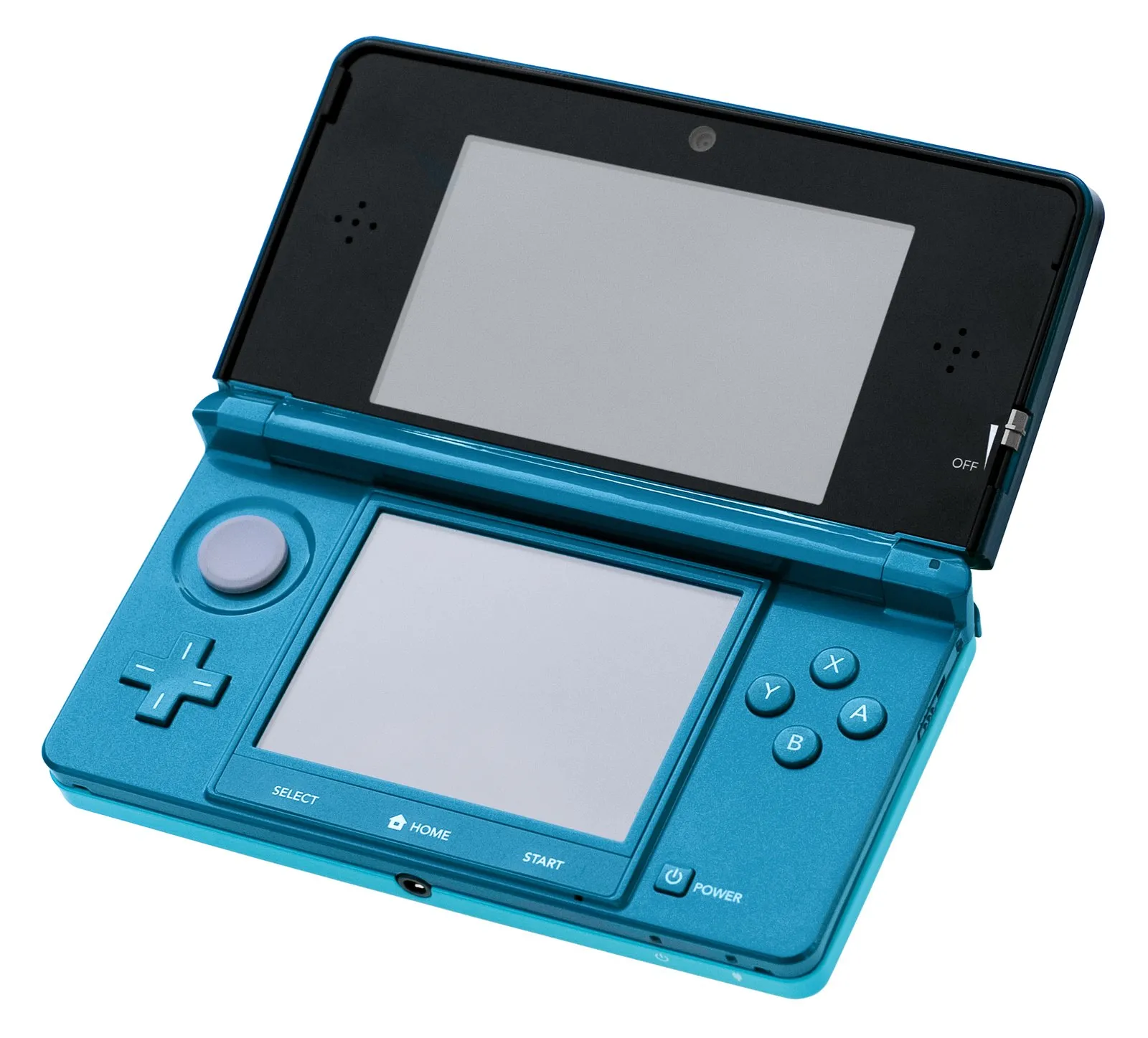
Nintendo stopped selling games on the 3DS and Wii U eShops on March 27, 2023. Photo: Evan-Amos / Wikimedia Commons (public domain).
Two different ways a game disappears
Before the numbers, one distinction that the public argument often blurs. There are two separate problems here, and they call for separate fixes.
The first is out of print. The game exists, and old copies may still work, but there is no legal way to buy it today from whoever owns the rights. The 3DS and Wii U eShop closure is that kind of event: cartridges in drawers keep working, while the storefront that sold the digital versions stopped taking orders.
The second is switched off. You bought the game, but parts of it stop working when the publisher’s servers close. NBA 2K25, covered below, is that kind of event.
The VGHF/SPN study measures only the first problem. The European initiative called “Stop Destroying Videogames” is about the second. Keeping them apart matters, because each piece of evidence only speaks to its own problem: the 13% figure says nothing about server shutdowns, and the EU initiative says nothing about 1980s cartridges.
The number: 13 percent, and what it counts
The study, Survey of the Video Game Reissue Market in the United States, was written by Phil Salvador for VGHF and SPN, with the University of Washington Information School’s GAME Research Group, and published in July 2023. Its headline finding: “Only 13 percent of classic video games published in the United States are currently in release.” The precise figure is 13.27%, from a random sample of 1,500 games, with a margin of error of ±2.5% at 95% confidence.
The method matters, because the figure is easy to misread. The researchers started from a MobyGames export of 27,627 games released in the US before 2010 and drew a random sample of 1,500. Different platform versions of the same game counted as one title. Each game’s status was checked twice, once by a VGHF volunteer team and once by a University of Washington student team, and VGHF staff resolved any disagreements. The checks ran from January 31 to April 15, 2023, so later reissues are not captured.
“In release” has a strict meaning in the report. A game counted only if it, or a version derived from it, was “reasonably, readily, and legally available from the game’s rightsholder” on a “currently produced or supported game platform.” Emulated, modified and re-implemented versions counted. Remakes did not. Neither did used copies on the second-hand market.
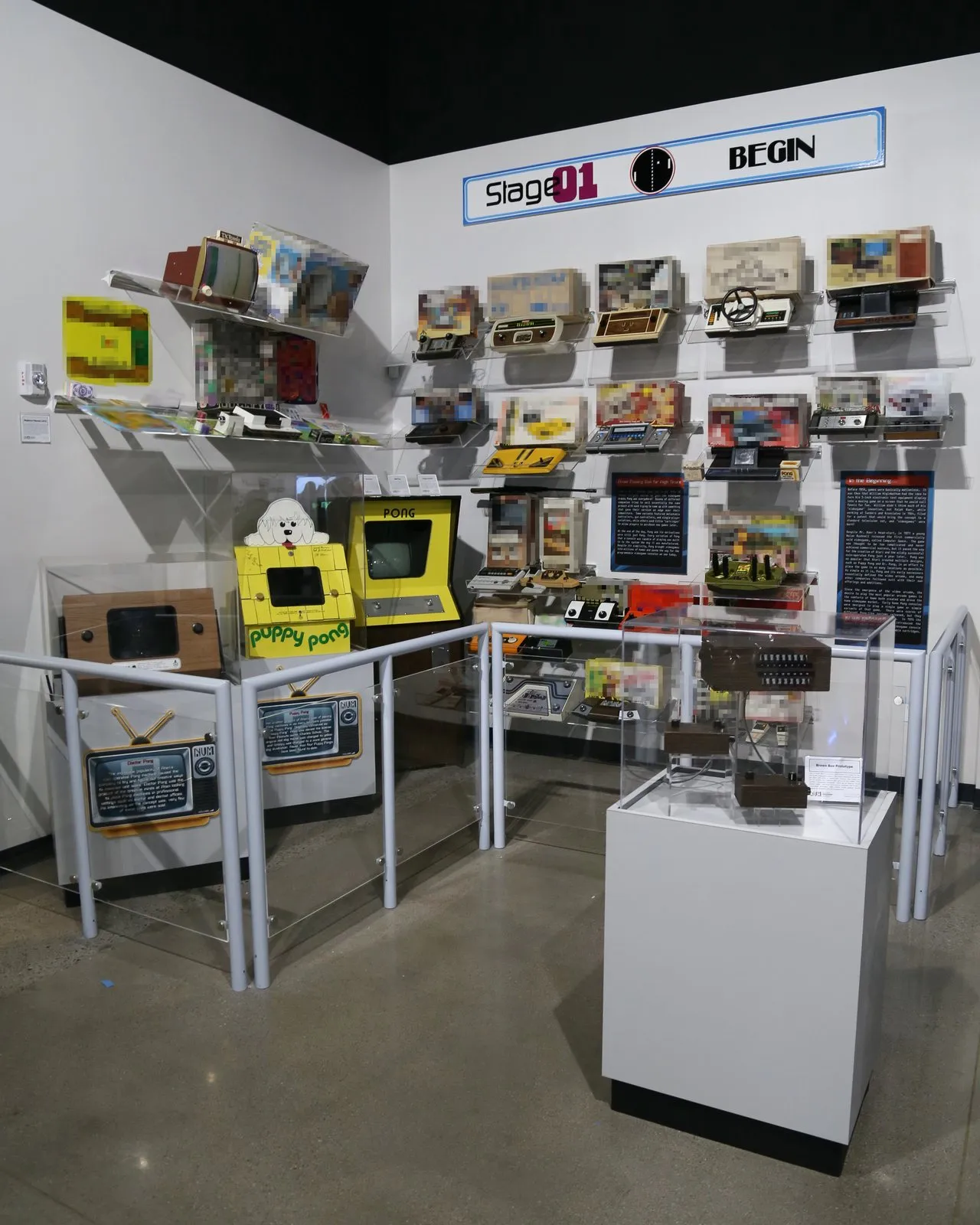
Pong-era home consoles on display at the National Videogame Museum in Frisco, Texas, at its opening event on April 2, 2016. Photo: Steve Rainwater / Wikimedia Commons (CC BY-SA 2.0), cropped.
The pattern holds across very different platforms. Commodore 64 games were in release at 4.50% (sample of 400), the Game Boy family at 5.87% (the full set of 1,873 games) and PlayStation 2 at 12.00% (sample of 400). No five-year period from 1960 to 2009 rose above 20%; the peak was 19.33%, for 1990–94. For games released before 1985, the rate falls below 3%, with an average of 2.59%, though the study’s earliest five-year groups are very small. The 1960–64 group holds a single game.
The report is open about why it exists. “We intend this study to be relevant to ongoing arguments about copyright law for video games in the United States,” it says. Its conclusions are pointed: “This is a systemic problem … No single company or platform owner is responsible for this reality,” and “The game industry must acknowledge this problem—and that libraries and archives can help solve it.” VGHF’s own blog post about the study went further and called the remaining 87% “critically endangered.” That is the foundation’s framing. What the study measured is commercial availability in one country, in one window of early 2023. It did not measure whether games survive.
The industry’s answer: a “vibrant” market
The Entertainment Software Association (ESA), which represents the US video game industry, read the same number the other way. In a February 2024 filing at the US Copyright Office, opposing an expanded preservation exemption, the ESA addressed the study directly:
“That many classic titles are not in current release at a particular moment in time does not mean that those titles are ‘lost’ … It simply means that the copyright owner made a business decision not to put those titles on the market at that time. That 13% … were found to be commercially available in early 2023 is a testament to the vibrancy of the market for classic games.”
The ESA’s argument rests on timing and choice. “Determining whether, when and how to commercialize their valuable copyrights is the prerogative of the copyright owner,” the filing says. A publisher may “give a title a rest until nostalgia would help support renewed demand,” it notes, or hold back an older game in a series to help sell its successor. On the ESA’s reading, a game that is off the market today is a rightsholder’s business decision about timing.
The filing listed the classic-game market as it stood in early 2024: Xbox Game Pass and backward compatibility, Nintendo Switch Online, PlayStation Plus Classics, Atari 50, and Antstream Arcade, which the ESA said offered “over 1300 licensed classic games.” And it warned about remote access: “Enabling widespread remote access to preserved games with minimal supervision would present a serious risk to an important market.” Dropping the on-site requirement, the ESA argued, would turn the exemption into one “potentially available to almost any nonprofit organization interested in providing online gameplay,” with “the potential to cause substantial harm to the legitimate market for games.”
So both sides cite the same figure. For VGHF, 13% shows how little of the medium’s history is on sale. For the ESA, it is the sum of many individual business decisions, and evidence that a market for old games exists and works.
The US referee: no remote access, for now
The ESA filing was part of the ninth triennial review under Section 1201 of the Digital Millennium Copyright Act, the provision that bars getting around copy protection unless an exemption applies. Libraries, archives and museums already had one for video games. They may get around protection to keep a game in playable condition, but a preserved game may not be “distributed or made available outside of the physical premises” of the institution. To play it, a researcher has to show up in person.
SPN and the Library Copyright Alliance (LCA) asked the Copyright Office to remove that premises requirement. In exchange, they offered limits: time-limited access, individual human review of each request, and use only for scholarship, teaching or research. Phil Salvador of VGHF, Laine Nooney of NYU, Dragan Espenschied of Rhizome and Ken Austin were among those who testified or filed in support. The ESA, Joint Creators I, and DVD CCA and AACS LA opposed it.
In October 2024, the Register of Copyrights recommended against the change. Proponents, she wrote, “have not met their burden of showing that the proposed off-premises uses in the video game class are likely to be fair.” Her market analysis leaned partly on the study itself. “Opponents have presented evidence of a substantial market for older video games,” she wrote, and while some older games will have no reissue market, proponents “concede there is a ‘healthy’ market for other reissued games.” The citation for that line is the reissue study’s own text.
The Register did not dismiss preservation. She “also supports preservation efforts,” she wrote, but “the statute requires her to consider whether the affected uses are or are likely to be noninfringing.” The federal government was not of one mind, either. The National Telecommunications and Information Administration (NTIA), part of the Commerce Department, supported removing the premises limit and said the proposed safeguards addressed the concerns raised in earlier rounds.
The scope of the outcome matters. The existing video game preservation exemption was renewed (“No oppositions were filed against renewal,” the Register noted), and the final rule was published in the Federal Register on October 28, 2024. What was denied was the off-site expansion, not preservation itself.
The next round is already under way. The Copyright Office opened the tenth triennial proceeding with a notice of inquiry on June 9, 2026. Petitions were due August 24, 2026, and comments on renewals by September 28, 2026. Three renewal petitions for the video game preservation exemption are on file, from Dan Elkins, Ken Austin and the LCA. Renewed exemptions would run from October 2027 to October 2030, so no outcome is due before 2027.
The EU referee: 1.29 million signatures, no new law
In Europe, the question came from players rather than archivists, and it concerned the second problem: games that stop working.
The European Citizens’ Initiative “Stop Destroying Videogames,” ECI(2024)000007, was registered on June 19, 2024, and collected signatures from July 31, 2024, to July 31, 2025. It was submitted to the European Commission on January 26, 2026, with 1,294,188 verified statements of support. Its organizers asked the EU to require publishers that sell or license games “to leave said videogames in a functional (playable) state,” and said the initiative “does not seek to acquire ownership … intellectual rights or monetization rights.” According to the Commission, the organizers also stressed that it “only targeted games yet to be developed, not those already commercially available.” The campaign behind it, “Stop Killing Games,” puts its case more starkly on its homepage: “Publishers are permanently destroying the video games you’ve paid for,” and “If you purchase a good, it shouldn’t self-destruct.”
The process ran through a meeting between the organizers and the Commission on February 23, 2026, a European Parliament public hearing on April 16, a European Economic and Social Committee hearing on May 19 and a Parliament plenary debate on May 21. The Commission answered on June 16, 2026, in Communication C(2026) 4110. A legal obligation to keep games playable, it concluded, “would not be proportionate.” It cited publishers’ intellectual property rights, confidential business information and know-how, the costs involved, and security risks for players once support ends, and it argued that existing EU consumer law “already provides important safeguards.” In its words: “Under copyright law, rightsholders are entitled to establish the conditions for the licensed use of their videogames, including the conditions for the termination of the licence.”
What it offered instead is voluntary and exploratory. By the end of 2026, the Commission intends to start stakeholder exchanges “to explore the possibility” of a self-regulatory, industry-led code of conduct on how games are wound down and on transparency to consumers. Such a code could include storefront labels flagging that a game may be discontinued, and “more partnerships between publishers and cultural heritage institutions to preserve video games.” The Commission also plans to report on how the Digital Content Directive is being applied, including to discontinued games, by the end of 2026.
The Communication also explains what EU law already says, which is useful to any player there. EU consumer law “does not set specific requirements for the duration of the supply” of games. But a shutdown can amount to a lack of conformity if it comes sooner than the consumer “may reasonably expect,” and in that case the Commission says a proportionate refund can be due, including in-game currency not yet spent. The Commission notes that the Court of Justice has not yet ruled on these questions.
The industry and consumer groups the Commission consulted split along predictable lines. According to the Commission, Video Games Europe and the European Games Developer Federation (EGDF) expressed “strong reservations” about a general obligation, citing business models, cybersecurity, the re-engineering it would require and third-party licenses that expire. In its own statement, the EGDF said that “Closing a game is always a tragedy for both players playing it and game developers who designed it,” while agreeing that a blanket legal obligation “is not a viable option.” It backed an “SME-friendly code of conduct” that would include the “smooth transfer of games to memory institutions.” On the consumer side, again as summarized by the Commission, BEUC and its French member Que Choisir Ensemble said consumers “primarily seek to retain access to games they have purchased rather than to receive financial compensation,” and that single-player games that use servers only to authenticate players “could therefore easily remain functional.”
The storefront: GOG’s promise, in GOG’s words
While regulators weighed obligations, one storefront made a commercial promise. GOG launched its Preservation Program in November 2024 with 100 classic games. “We commit our own resources to maintaining their compatibility with modern systems,” the company said at launch. Its program page says the program “ensures classic games remain playable on modern systems, even after their developers stopped supporting them,” sold “DRM-free and with dedicated tech support.” At launch, GOG also cited VGHF’s research, saying “87% of games created before 2010 are inaccessible today” and that it was “set on getting that number down to zero.” That is GOG’s paraphrase, not the study’s wording.
The program’s FAQ sets the limits. It covers Windows versions only. GOG decides what joins: new releases cannot, but the program “may include any game that needs maintenance … even if it was released just a few months ago.” GOG avoids community mods “to preserve the original game.” And the FAQ speaks directly to the out-of-print problem: “Games in the GOG Preservation Program remain part of the initiative even if they are no longer available for sale,” and GOG says it will keep ensuring their compatibility. That is a company’s stated commitment, not a contract or a law. By GOG’s own count, the program now holds about 300 games.
The newest additions show that the program is not only about old games. Octopath Traveler and Octopath Traveler II, Square Enix role-playing games first released in 2018 and 2023, went live on GOG on October 8, 2026, with the Preservation Program badge on their store pages and sold DRM-free.
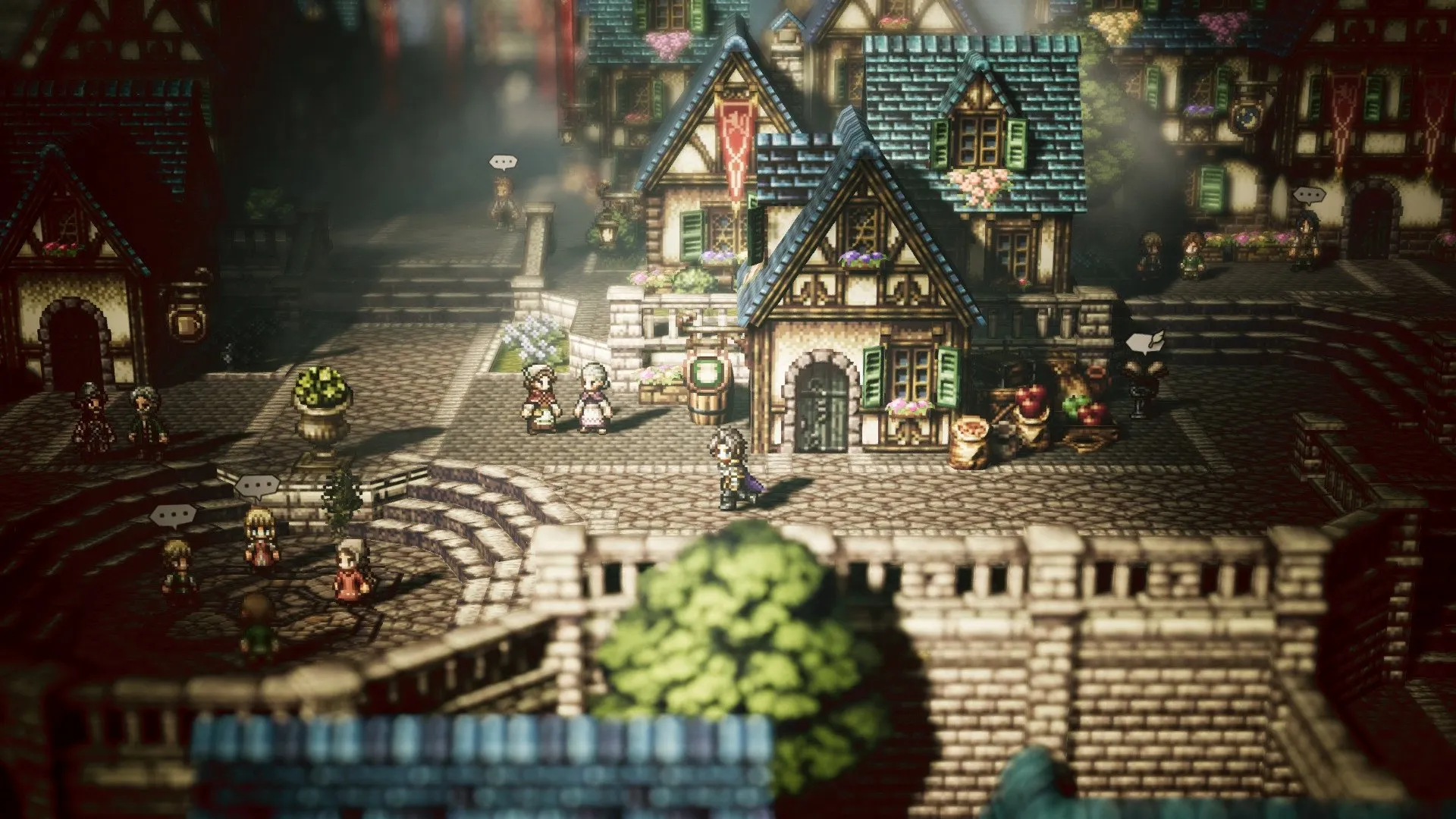
A town square in Octopath Traveler’s HD-2D style. Official screenshot: Square Enix (Steam store, OCTOPATH TRAVELER).
Switched off: what NBA 2K25 owners keep
The second kind of disappearance looks different up close. 2K’s support page “NBA 2K25: Server Sunset,” published September 3, 2026, and updated October 2, says the game “will no longer be available for purchase as of October 30, 2026” and is “discontinued as of December 31, 2026.” It continues: “As of January 1, 2027, you’ll no longer be able to play multiplayer games or access any online game modes. MyCAREER and MyTEAM will no longer be available.”
The same page lists what stays. Offline modes (Play Now, MyNBA, The W and MyWNBA) keep working for owners, and the game can still be redownloaded. “Any features that require a connection to 2K servers will be unavailable,” 2K says. Earlier games in the annual series follow the same pattern: 2K’s support pages list NBA 2K24 and older entries as discontinued, with offline modes only.
This is the problem the EU initiative targets, and it is a different one from the 13%. Copies of NBA 2K25 will keep running after January 1, 2027. What ends is the part of the game that depends on 2K’s servers, including two of its headline modes. 2K’s page does not address what happens to unspent in-game currency.
Sidebar: TrucoTron, Mar del Plata and the case for running code
For historians, owning a copy of a game and being able to run it are different things. An Argentine university project makes the point concretely.
Researchers at the Universidad Nacional de Mar del Plata (UNMdP) and the INHUS institute (CONICET–UNMdP) ran two linked projects, Tecno-Historia MDQ and Arcades MDQ, dated 2021. Arcades MDQ rebuilt an arcade cabinet running the MAME emulator as a teaching tool about the history of Argentine computing and of Mar del Plata’s SACOA arcades from the 1970s to the 1990s. Ariel Vercelli, Karina Bianculli and colleagues described the work in a peer-reviewed 2022 paper in the Electronic Journal of SADIO.
The cabinet included TrucoTron, one of the few arcade games made in Argentina, by PlayTronic / Ricardo Gayoso and Gustavo Abella. It plays truco, a card game widely played in Argentina, against the machine; the authors say its original date is hard to pin down. The cabinet also ran a monitoring plugin called RENÉ, named in homage to René Lavand, which let players watch the machine’s card decisions as a hand was played.
What the running code showed is something a boxed copy cannot. Gustavo del Dago’s analysis of the disassembled program, as quoted by the authors, found that TrucoTron used the cards in the human player’s hand as one of its criteria. In the opening phase of a hand, the envido, “El 50 % de las veces el programa decide su jugada de manera ilícita, una forma de hacer trampa” (half of the time, the program decides its move illicitly, a way of cheating). The authors describe Argentina’s computing-history record as fragmented, with “serias discontinuidades” (serious discontinuities). It is a small, local example of the point the US libraries made in Washington: research needs a game that runs.
What is still undecided
None of the questions in this story is settled.
In the US, the 2027 Section 1201 cycle will decide whether the video game preservation exemption carries on from October 2027 to October 2030, and on what terms. In the EU, the code of conduct does not exist yet. The Commission has committed only to start talks by the end of 2026 and to report on the Digital Content Directive by the same date. GOG’s program grows at the company’s own discretion. And for the pre-2010 US games outside the study’s “in release” count, the ESA’s position is on the record: whether and when they return is the rightsholder’s call.
What the record does show is who holds each lever. Rightsholders decide what is sold, and publishers decide how long their servers run. Regulators in Washington and Brussels decide what libraries may do and what publishers must do, and both, for now, have declined to move those decisions away from rightsholders. Storefronts like GOG decide what they will maintain. Players can sign initiatives and, in the EU, invoke consumer law. The next dated steps, the Commission’s talks and directive report by the end of 2026 and the Copyright Office’s decision on the 2027 renewals, will show which reading of that 13% carries more weight.
Questions and answers
- Does the 13% figure mean 87% of old games are “lost”?
- No. The Video Game History Foundation and Software Preservation Network study measured whether US games released before 2010 could be legally bought from their rightsholders between January 31 and April 15, 2023. It did not measure whether games survive. VGHF describes the rest as “critically endangered”; that is the foundation’s framing.
- What did the European Commission decide on the “Stop Destroying Videogames” initiative?
- In Communication C(2026) 4110 of June 16, 2026, the European Commission said a legal obligation to keep games playable “would not be proportionate.” It plans stakeholder talks by the end of 2026 on a voluntary, industry-led code of conduct for games’ end of life.
- When do NBA 2K25’s online modes end?
- As of January 1, 2027, according to 2K’s “NBA 2K25: Server Sunset” support page. 2K says offline modes (Play Now, MyNBA, The W and MyWNBA) remain available to owners, and the game can still be redownloaded.
Sources
- Phil Salvador, Survey of the Video Game Reissue Market in the United States, Video Game History Foundation & Software Preservation Network, July 2023 (v1.1, CC BY 4.0)
- Video Game History Foundation (Kelsey Lewin), “87% Missing: the Disappearance of Classic Video Games,” July 10, 2023
- U.S. Copyright Office, Section 1201 Rulemaking, Ninth Triennial Proceeding: Recommendation of the Register of Copyrights, October 2024
- Library of Congress / U.S. Copyright Office, Final Rule (Federal Register doc. 2024-24563), October 28, 2024
- Entertainment Software Association, Long Comment in Opposition, Proposed Class 6(b), February 2024
- U.S. Copyright Office, Tenth Triennial Section 1201 Proceeding (2027 cycle)
- Federal Register, Notice of Inquiry: Exemptions to Permit Circumvention of Access Controls on Copyrighted Works, June 9, 2026
- U.S. Copyright Office, 2027 cycle renewal petitions
- European Citizens’ Initiative register, ECI(2024)000007 “Stop Destroying Videogames”
- European Commission, Communication C(2026) 4110 on the “Stop Destroying Videogames” initiative, June 16, 2026
- European Commission, reply to the “Stop Destroying Videogames” initiative (1,294,188 verified statements of support)
- European Commission, press release: Commission will engage industry following the citizens’ initiative, June 16, 2026
- European Games Developer Federation, statement on the Commission response to Stop Killing Games, June 2026
- Stop Killing Games, campaign homepage (accessed October 11, 2026)
- GOG, “GOG re-releases 100 improved classic games as part of the new GOG Preservation Program,” November 13, 2024
- GOG, GOG Preservation Program page and FAQ (accessed October 11, 2026)
- GOG store, OCTOPATH TRAVELER (accessed October 11, 2026)
- GOG store, OCTOPATH TRAVELER II (accessed October 11, 2026)
- Square Enix, OCTOPATH TRAVELER and OCTOPATH TRAVELER II press release, October 1, 2026
- 2K / NBA 2K Support, “NBA 2K25: Server Sunset,” September 3, 2026 (updated October 2, 2026)
- 2K / NBA 2K Support, “NBA 2K: Server Sunsets” (updated January 6, 2026)
- Nintendo of America Support, Wii U and Nintendo 3DS eShop discontinuation Q&A (accessed October 11, 2026)
- Vercelli, Bianculli et al., “Videogames and the stories of national informatics,” Electronic Journal of SADIO 21(1), 2022, pp. 2–16
- Image: Hanno Böck, “Consoles-computerspielemuseum.jpg,” Wikimedia Commons (CC0 1.0)
- Image: Steve Rainwater, “Pong consoles at National Videogame Museum.jpg,” Wikimedia Commons (CC BY-SA 2.0)
- Image: Evan-Amos, “Nintendo-3DS-AquaOpen.jpg,” Wikimedia Commons (public domain)
- Image: Square Enix, OCTOPATH TRAVELER official screenshot, Steam store (app 921570)